

Prof. Bashir SALEH
Libyan Academy, Tripoli, Liby
Biography
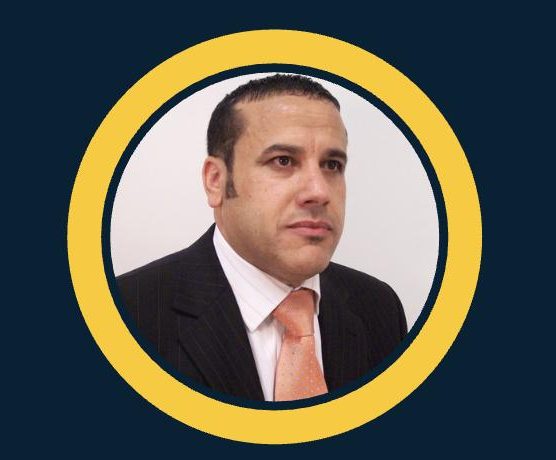
Professor Dr. Bashir Ali Khalifa Saleh is an Associate Professor of Structural Engineering at the Libyan Academy with over 20 years of distinguished experience in higher education, scientific research, structural engineering, and engineering consultancy. He received his B.Sc. (2002), M.Sc. (2007), and Ph.D. (2013) in Structural Engineering from the Warsaw University of Technology, Poland.
His research expertise encompasses computational structural mechanics, Finite Element Analysis (FEA), and the numerical simulation of reinforced concrete, steel, and composite structures using advanced engineering platforms such as ABAQUS, LS-DYNA, and MSC Patran. His research interests include structural performance under fire, blast, corrosion, seismic and impact loading, as well as ultra-high-performance concrete (UHPC), sustainable construction materials, and Eurocode-based structural design.
Professor Saleh has authored more than 50 peer-reviewed international publications, including numerous Scopus-indexed articles published in Q1 and Q2 international journals, in addition to publications with Horizon Research Publishing (HRPUB). His scholarly work has significantly contributed to the advancement of structural durability, nonlinear finite element modeling, composite structures, and performance-based structural engineering.
In addition to his research achievements, Professor Saleh has held several senior academic leadership positions, including Head of the Civil Engineering Department, Head of the Structural Engineering Division, and Chair of the Ph.D. Committee in Structural Engineeringat the Libyan Academy. He is an active reviewer for several prestigious international journals and a member of the International Association for Bridge and Structural Engineering (IABSE) and the U.S. Green Building Council (USGBC–LEED).
Recognized internationally for his scientific contributions, Professor Saleh has been invited to deliver keynote speeches, invited lectures, and participate in scientific and technical committeesat major international conferences and academic forums in Japan, South Africa, Poland, France, Qatar, Morocco, and Tunisia. His work integrates advanced numerical simulation with practical structural engineering solutions, contributing to the development of resilient, sustainable, and innovative infrastructure systems while fostering international scientific collaboration.
Experimental and Numerical Investigation of Composite Structures Highly Vulnerable to Exceptional Events (Hurricanes, Explosions, and Earthquakes)
Abstract
It is a great honor to present this keynote lecture addressing one of the most critical challenges in modern structural engineering: enhancing the resilience of structures subjected to extreme natural and man-made hazards, including hurricanes, earthquakes, and explosions. Increasing urbanization, climate change, and the expansion of critical infrastructure have significantly elevated the vulnerability of buildings to multi-hazard events, underscoring the need for resilient, performance-based structural design. Structural resilience extends beyond strength and stability to include the ability to withstand severe loading, limit damage, preserve functionality, and recover efficiently after hazardous events. Among the available structural systems, steel–concrete composite structures have emerged as a leading solution due to their high strength, ductility, stiffness, redundancy, and energy dissipation capacity. However, their behavior under extreme dynamic loading and progressive collapse scenarios continues to require extensive investigation. This keynote presents the outcomes of an extensive research program combining laboratory experiments with advanced nonlinear finite element modeling to investigate the performance of steel, composite, and hybrid structural systems. Particular attention is given to beam-to-column connections, composite joints, Concrete-Filled Steel Tubes (CFST), Ultra-High-Performance Concrete (UHPC) members, and innovative composite configurations designed to improve structural robustness and resilience. The lecture reviews recent advances in understanding failure mechanisms, connection behavior, energy absorption, progressive collapse resistance, and the influence of advanced materials under exceptional loading conditions. It also highlights emerging technologies, including digital twins, structural health monitoring, artificial intelligence, and resilience-based design methodologies that are transforming the future of structural engineering. Ultimately, this keynote provides an integrated scientific perspective on resilient composite structures and identifies future research directions for developing safer, smarter, and more sustainable infrastructure capable of maintaining performance during and after extreme events. Representative experimental and numerical results from recent studies are presented to illustrate the effectiveness of advanced composite systems under seismic, blast, and extreme wind loading scenarios.
Partners