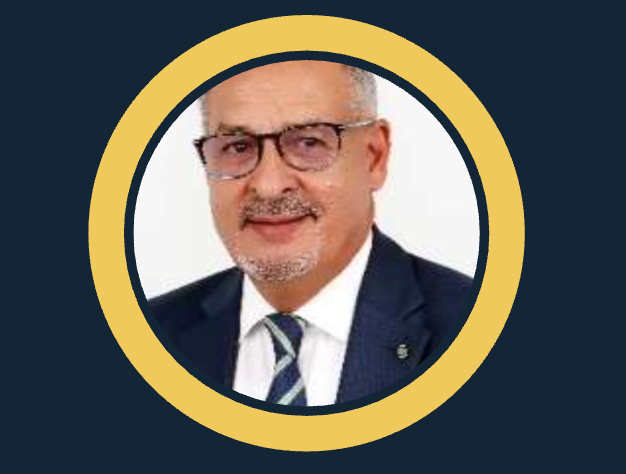
Dr. Eng. KHAMMAR MRABIT
Commissioner to the African Commission on Nuclear Energy (AFCONE)
Biography
Dr. Mrabit has over 35 years of experience in the fields of nuclear energy, radiological applications, and related technical cooperation activities, with a particular focus on nuclear safety, radiation protection, and nuclear security. He joined the IAEA in 1987, where he participated in numerous programs and projects related to nuclear safety, nuclear security, and technical cooperation involving nuclear and radiological applications in medicine, industry, agriculture, and research, for which he retained responsibility until May 31, 2016. During this period, he participated in or led more than three hundred official missions across more than one hundred IAEA Member States, including both developing and developed countries. Within the framework of IAEA programs, he established and maintained close cooperation with IAEA Member States in general, and with all African IAEA Member States in particular. This cooperation encompassed the planning, implementation, negotiation, and evaluation of projects and activities utilizing or controlling nuclear and radiological techniques across various applications and institutions.
From April 2011 to May 2016, he served as Director of the Division of Nuclear Security within the IAEA Department of Nuclear Safety and Security. He was responsible for the planning and implementation of the IAEA nuclear security plans and programs (exceeding twenty-five million euros per year), approved by the IAEA Board of Governors and endorsed by its General Conference. This included, among other things, the development of guidance publications on nuclear security, as well as provisions for their use and application—notably through training courses and workshops, Coordinated Research Projects (CRPs), peer reviews and advisory services, conferences, and other information-sharing events.
Dr. Mrabit notably chaired the IAEA Coordination Committee from August 2008 to March 2011, a period during which programs related to IAEA safety standards and security guides were planned, implemented, and coordinated. He served as Chairman of the Global Nuclear Safety and Security Network (GNSSN), Chairman of the Forum of Nuclear Regulatory Bodies in Africa (FNRBA), Chairman of the International Network for Education and Training in Emergency Preparedness and Response (iNET-EPR), and member of the IAEA Commission on Safety Standards (CSS), which is responsible for developing IAEA safety standards and nuclear security guidance.
On June 1, 2016, Dr. Khammar Mrabit returned to the Kingdom of Morocco to become the first Director General of the newly created Moroccan Agency for Nuclear and Radiological Safety and Security (AMSSNuR), the national body responsible for regulating nuclear safety, security, and safeguards. In this role, through the end of 2021, he developed and led the implementation of a vision and strategic action plan for the 2017–2021 period, aimed at establishing and maintaining an independent, credible, and recognized authority.
In October 2021, he ran in the national parliamentary elections and was elected. He currently serves in the House of Councillors of the Moroccan Parliament, on the EU-Morocco Joint Parliamentary Committee, and in several bilateral parliamentary friendship groups involving African countries.
As a recognized international expert in technical cooperation, nuclear safety and security, and energy transition, he collaborates with the IAEA and the European Commission. He was recently appointed Commissioner to the African Commission on Nuclear Energy (AFCONE), representing the Kingdom of Morocco.
Artificial Intelligence at the Core of Sustainable Energy Ecosystems: From Small Modular Reactors (SMRs) to Smart Grids and Industry 5.0
Abstract :
The global energy transition requires a profound transformation of energy production, transmission, storage, and consumption. Recent advances in Artificial Intelligence, next-generation nuclear technologies, and intelligent electrical networks are enabling a new generation of resilient, low-carbon, and sustainable energy ecosystems.
This multidisciplinary keynote brings together three complementary areas of expertise:
- Generative, Predictive and Data-driven Artificial Intelligence
- Smart Electrical Grids
- Small Modular Reactors (SMRs) for seawater desalination, clean hydrogen production and industrial decarbonization – clean energies
The presentation demonstrates how Artificial Intelligence becomes the digital brain of future energy infrastructures through:
- energy demand forecasting;
- real-time grid optimization;
- predictive maintenance;
- digital twins;
- intelligent coordination between SMRs, renewable energies and storage systems;
- data-driven decision support.
Several industrial use cases will illustrate these concepts in:
- energy production;
- desalination plants;
- smart agriculture;
- manufacturing;
- smart cities;
- sustainable transportation.
Special attention will be given to Morocco’s opportunities in strengthening energy sovereignty, water security, industrial competitiveness, and sustainable development.
The conference concludes with a practical roadmap for integrating responsible Artificial Intelligence into future energy ecosystems while ensuring cybersecurity, operational excellence, economic efficiency and environmental sustainability.
Partners