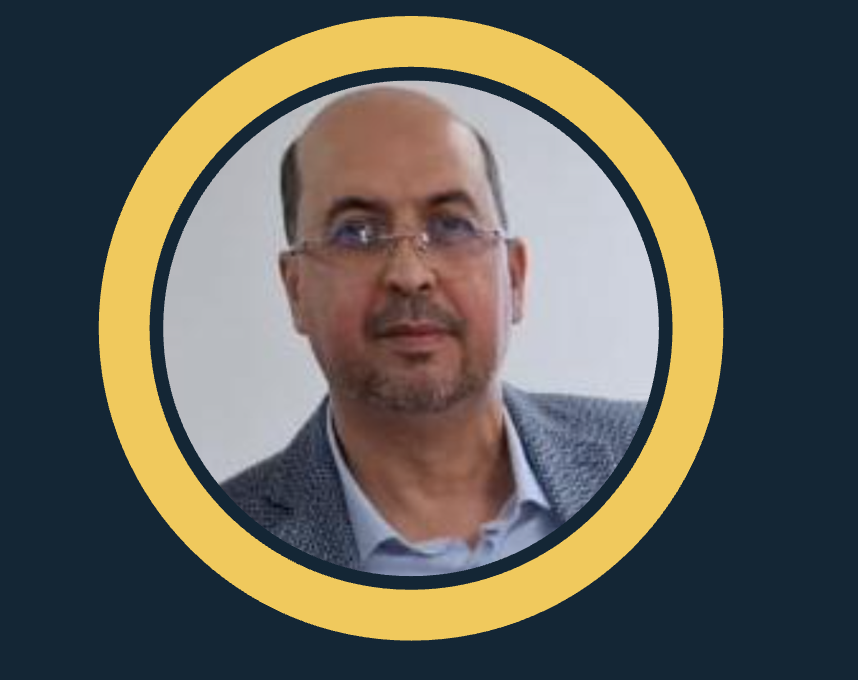
Pr. Mohammed Kissaoui
ENSET Mohammedia, Hassan II University of Casablanca, Morocco
Biography
Mohammed Kissaoui is a Professor and researcher in Electrical Engineering and Automatic Control at ENSET Mohammedia, Hassan II University of Casablanca, Morocco. He holds a PhD in Electrical Engineering , a Master’s degree in Automatic Control, Signal Processing and Industrial Computing, and an Agrégation in Electrical Engineering. He currently coordinates the Electrical Engineering and Industrial Control Systems (GECSI) program. His research focuses on smart microgrids, renewable energy systems, energy management and optimization, advanced control, energy storage, battery health estimation, and artificial intelligence applied to energy systems. He has authored numerous scientific publications in international journals and conferences and serves as a reviewer for several international journals. His expertise bridges academic research, engineering education, intelligent energy systems, and industrial applications.
https://orcid.org/0000-0001-8873-8621
https://scholar.google.com/citations?hl=fr&user=yj0xFz8AAAAJ
https://www.scopus.com/authid/detail.uri?authorId=56102482000
E-mail : [email protected]
Designing to Innovate: Simplicity, Reliability and Complex Systems
Abstract
The increasing integration of renewable energy sources into modern power systems presents major challenges related to intermittency, system stability, energy efficiency, and the sustainable operation of energy storage systems. In this context, smart microgrids offer promising solutions for enhancing renewable energy integration, improving operational flexibility, and ensuring reliable energy management.
This keynote presents research advances along a three-stage progression in microgrid technologies. First, it addresses advanced control of renewable energy conversion systems, with particular emphasis on wind energy applications, nonlinear control strategies (backstepping, ADRC, neural networks), and power optimization.
Second, it explores microgrid operation under grid-connected and islanded modes, highlighting traditional energy management strategies, storage coordination, and energy flow optimization. Third, particular attention is devoted to the integration of artificial intelligence (AI) and Model Predictive Control (MPC) for predictive energy management. A recent research contribution combining hybrid forecasting models with a closed-loop MPC framework is presented. The proposed approach integrates photovoltaic generation forecasting (GRU-XGBoost) and load forecasting (LSTM-GWO) with multi-objective optimization over a 24-hour prediction horizon, simultaneously considering operating costs, carbon emissions, and battery degradation. Simulation results demonstrate significant performance improvements, reporting reductions of 7.1% in total operating costs and 12% in CO₂ emissions compared with rule-based control strategies.
Finally, this keynote discusses the main challenges and future research directions toward intelligent, autonomous, and sustainable microgrids. Emphasis is placed on the complementary roles of advanced control, AI-based forecasting, predictive optimization, and multi-criteria energy management in supporting the transition toward more resilient energy systems.
Keywords: Smart microgrids; renewable energy; advanced control ; artificial intelligence; Model Predictive Control (MPC); multi-objective optimization; battery degradation; carbon emissions; GRU-XGBoost; LSTM-GWO.
Partners