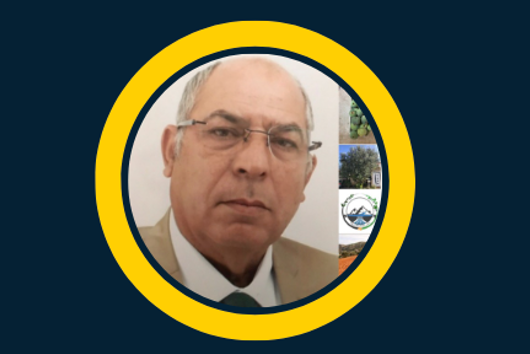
Dr. Eng. Hamid El Mrabet
Cross-functional Manager at Industrial Division of Soprasteria Group, France

Biography
A graduate engineer from INSA Lyon / École Centrale de Lyon (1989) and holder of a PhD in Artificial Intelligence (INRIA, 1991), Dr. Hamid El Mrabet brings nearly 40 years of experience within the Sopra Steria group, where he serves as a cross-functional manager within the Group Industrial Directorate, in charge of AI, Requirements Engineering, software quality, group engineering methods and tooling, Engineer Certifications, as well as Industry and Publisher Relations.
A founding member and certifier for CFTL for over 16 years, he is also an independent AI consultant and speaker, regularly presenting at major engineering schools within the EuroMed network in Morocco. During ICAT2I 2025, his keynote made a strong impression by structuring AI around three pillars — Generative, Predictive, and Extractive — within an Industry 4.0 to Industry 5.0 perspective.
For ICAT2I 2026, he will share his expertise in generative, predictive, and data-driven AI, digital twins, multi-agent systems, and responsible AI, supporting an integrated vision of sustainable energy ecosystems.
Artificial Intelligence at the Core of Sustainable Energy Ecosystems: From Small Modular Reactors (SMRs) to Smart Grids and Industry 5.0
Abstract :
The global energy transition requires a profound transformation of energy production, transmission, storage, and consumption. Recent advances in Artificial Intelligence, next-generation nuclear technologies, and intelligent electrical networks are enabling a new generation of resilient, low-carbon, and sustainable energy ecosystems.
This multidisciplinary keynote brings together three complementary areas of expertise:
- Generative, Predictive and Data-driven Artificial Intelligence
- Smart Electrical Grids
- Small Modular Reactors (SMRs) for seawater desalination, clean hydrogen production and industrial decarbonization – clean energies
The presentation demonstrates how Artificial Intelligence becomes the digital brain of future energy infrastructures through:
- energy demand forecasting;
- real-time grid optimization;
- predictive maintenance;
- digital twins;
- intelligent coordination between SMRs, renewable energies and storage systems;
- data-driven decision support.
Several industrial use cases will illustrate these concepts in:
- energy production;
- desalination plants;
- smart agriculture;
- manufacturing;
- smart cities;
- sustainable transportation.
Special attention will be given to Morocco’s opportunities in strengthening energy sovereignty, water security, industrial competitiveness, and sustainable development.
The conference concludes with a practical roadmap for integrating responsible Artificial Intelligence into future energy ecosystems while ensuring cybersecurity, operational excellence, economic efficiency and environmental sustainability.
Partners